Table of Contents
Riyo TOI Booking Desk
📞 +91 98219 84000Official Agency for Times of India Public Notice Placements
How to Publish a Public Notice in Times of India (2026 Step-by-Step Guide)
By Saptak Chattopadhyay | Legal Media Consultant | Kolkata, West Bengal
It is observed that majority of the readers do not give much attention to the small notices or ads on a daily basis when they read The Times of India. The importance of these notices becomes very evident, however, when we are obliged to place one on our own behalf.
Publishing a public notice in a well-read newspaper, such as The Times of India, is frequently a mandatory part of the law when it comes to completing a property title search, or even a name change in a state records office, or a corporate compliance requirement. Failure to do it or the words used may nullify the whole transaction.
When Do You Actually Need to Publish a Public Notice?
Not every situation needs a newspaper notice, but in real life, people often end up needing it more than they expect. Usually, it falls under four main categories:
1. Property Transactions
If you are buying, selling, or transferring a property, a public notice property ad is published to inform anyone who may have a claim, such as a creditor, co-owner, or legal heir, to come forward before the transaction is completed. This helps protect the buyer from future disputes by making the transaction transparent and inviting objections within a defined time frame. It is also closely connected with documents like the Encumbrance Certificate and the title investigation report, which help verify whether the property is free from prior charges or legal issues.
2. Lost or Missing Documents
Have you lost your Sale Agreement, Share Certificate, or crucially important Property Papers and need to publish a lost and found ad? In these kinds of scenarios, publishing a public notice property ad in the newspaper becomes almost a compulsory step before the relevant authorities issue a duplicate. Please note most agencies will typically ask for both a Police FIR and the published public notice/lost and found ad before moving forward with your request.
3. Corporate Compliance
Companies must publish official notices when there are important changes that affect shareholders or the public. These notices are required by law under the Companies Act. Newspapers like The Times of India are approved platforms where such announcements are published so that the information reaches a wide audience clearly and transparently.
4. Personal Identity Changes
A name change notice ad published in a newspaper, along with a Gazette Notification, is often needed when updating official records. Banks, passport offices, educational institutions, and employers usually ask for these documents to verify the change and update their records correctly. Common triggers: name change after marriage, religious conversion, personal preference; change of signature for banking records etc.
Choosing the Right Public Notice Ad Format
Choosing the wrong format can lead to extra cost and delays. Use this comparison table to decide:
| Format | Best For | Cost Level |
|---|---|---|
| Classified Text (ROL) | Name change, lost items | ₹ (Budget) |
| Classified Display | Property disputes, court summons | ₹₹ (Moderate) |
| Display Ad | Bank auctions, corporate tenders | ₹₹₹ (Premium) |
Classified Text (ROL)
This is the most economical option. The notice is printed as plain text in a continuous line without borders, boxes, or any special layout. It is generally used for name change announcements and other legal notices where the focus is only on the written information.
Classified Display
This format includes a border, bold headings, and a clear structure. It is usually used for property dispute notices or court summons. It helps the notice stand out and is preferred when the matter is more serious and needs higher visibility.
Display Ads
Full-format ads are published in the main pages of the newspaper. They are mostly used for bank auction notices, government tenders, and major corporate announcements. This format is chosen when the notice needs maximum visibility.
★ Pro Tip on Visibility
Classified Display is preferred for property matters because the border and bold heading help it stand out to legal panels and banks during due diligence.
The Must-Have Legal Phrases
Courts and institutions expect these standard phrases:
- ✓ "To whomsoever it may concern" — Establishing a universal address.
- ✓ "Any person having any claim, right, title..." — Formal invitation for counter-claims.
- ✓ "...within 14 days from the date of publication" — Sets the statutory objection window.
- ✓ "Failing which, the undersigned shall proceed..." — Closing the notice with legal consequence.
For property and inheritance notices, it is best to have the content prepared or checked by an advocate or authorized legal expert. A small legal review fee is minor compared to the risk of a wrong notice, which can delay or even disrupt a property transaction.
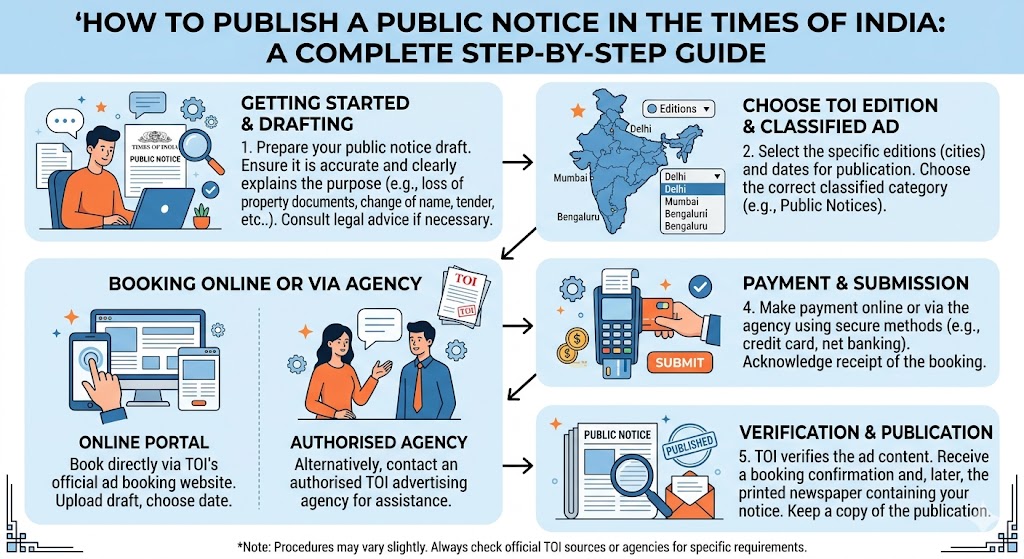
How to Book: Step-by-Step
Step 1: Draft Your Notice Text
Use formal English. For property matters, ensure an advocate checks the draft to avoid legal loopholes.
Step 2: Choose Your TOI Edition
Select city-specific editions (Mumbai, Delhi, Bangalore) based on where the property or transaction is located.
Step 3: Gather Your Supporting Documents
The documents required depend on the type of notice being published:
| Notice Type | Documents Needed |
|---|---|
| Name Change | Notarized Affidavit or Gazette Notification copy |
| Lost Property Documents | Police FIR copy + property details |
| Property Title Notice | Draft text (advocate-approved recommended) |
| Corporate (AGM/Results) | Board Resolution or Authorized Signatory letter |
Step 4: Select Your Publication Date
Most legal notices include a 7 to 14 day period after publication for anyone to raise objections. Plan the dates in advance so you do not run out of time before a deadline.
Step 5: Submit and Confirm
Check the edition, publication date, and final text carefully. Once confirmed, ensure you keep the physical tear sheet and E-paper PDF as proof.
5 Pro Tips for a Legally Airtight Public Notice
1 Keep the Physical Tear Sheet
On the day of publication, keep a copy of the actual newspaper page. This serves as valid evidence for courts and registration offices.
2 Download the E-Paper Version
The print ad also appears in the TOI e-paper. Download and save the PDF copy for dated digital proof of publication.
3 Plan Around the Objection Window
Always allow the full 7 to 14 day objection period to complete before closing any property deals or registrations.
4 Verify Edition-Specific Rates
Mumbai and Delhi editions usually cost more than others. Check the latest rate card for the specific city before planning your budget.
5 Use the Right Language for Multi-State Notices
If stakeholders are in Hindi-speaking regions, consider publishing in a leading Hindi newspaper along with TOI for complete legal coverage.
Frequently Asked Questions
How much does a public notice ad cost in Times of India? ▼
Can I publish a notice if I have lost my property documents? ▼
How many days should I give the public to respond? ▼
Do I need a lawyer to publish a public notice in TOI? ▼
Will my public notice appear in the TOI online edition? ▼
What documents are required for a name change notice in TOI? ▼
Conclusion
A public notice in The Times of India is not just a formality. It works as a legal record that shows you have given proper public notice and followed the required process. Doing it correctly helps prevent future disputes and delays.
Key Takeaways:
- Use the correct format for your specific legal purpose.
- Stick to standard legal wording or consult an advocate.
- Plan your timeline around the full objection period.
- Always keep both a physical tear sheet and a digital e-paper copy.
Need help drafting or booking your public notice in TOI? Contact our team for a simple and hassle-free process, from preparing the text to getting the notice published and confirmed.
Saptak Chattopadhyay is a legal media consultant based in Kolkata. He specializes in statutory advertising compliance and has helped thousands of clients navigate the complexities of national newspaper placements.